


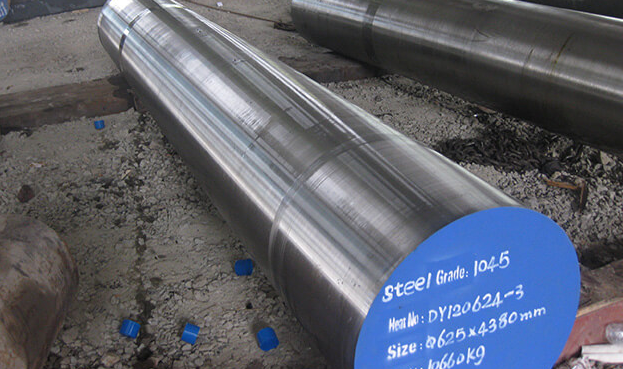
AISI 1045 steel is a medium tensile steel supplied in a black hot-rolled or normalized condition. It has a tensile strength of 570 – 700 MPa and Brinell hardness ranging between 170 and 210. 1045 steel exhibits medium tensile strength, good weldability and machinability, and high strength. Typically used in machinery parts, die forging, hot upsetting, gears, crankshafts, shafts, axles, bolts, studs, pinions, casters, and support plates. C1045 is a medium carbon, medium tensile steel supplied as forged or normalized. This steel shows reasonable strength and toughness. C1045 will through harden to 2.5” (63mm) with a tensile strength of 66-120 Ksi (620-850 MPa)
C1045 is a versatile medium carbon engineering steel that can be through hardened to, as well as being flame or induction hardened. The steel can be readily welded and machined providing correct procedures are followed.
AISI 1045 steel is characterized by good weldability, good machinability, and high strength and impact properties in either the normalized or hot-rolled condition.
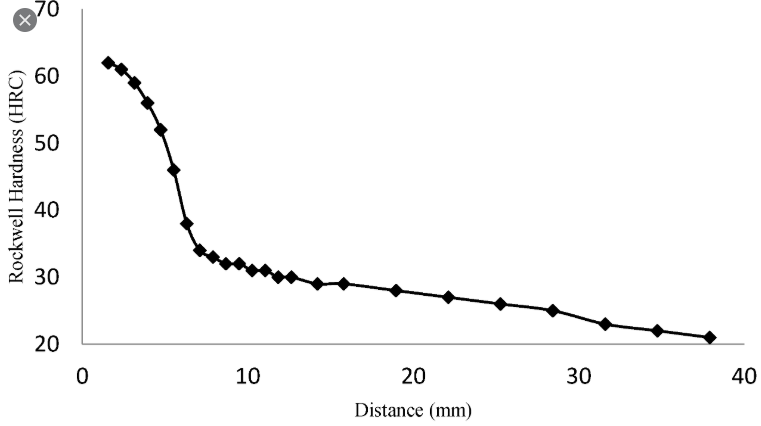
AISI 1045 steel has a low through-hardening capability with only sections of around 60 mm in size being recommended as suitable for tempering and through-hardening. However, it can be efficiently flame- or induction-hardened in the normalized or hot rolled condition to obtain surface hardnesses in the range of Rc 54 – Rc 60 based on factors such as section size, type of set up, quenching medium used etc.
AISI 1045 steel lacks suitable alloying elements and hence does not respond to the nitriding process.
Chemical Composition
| Element | Content |
| Carbon, C | 0.420 – 0.50 % |
| Iron, Fe | 98.51 – 98.98 % |
| Manganese, Mn | 0.60 – 0.90 % |
| Phosphorous, P | ≤ 0.040 % |
| Sulfur, S | ≤ 0.050 % |
Physical Properties
| Physical Properties | Metric | Imperial |
| Density | 7.87 g/cc | 0.284 lb/in3 |
1045 is a medium tensile low hardenability carbon steel generally supplied in the black hot rolled or occasionally in the normalised condition, with a typical tensile strength range 570 – 700 Mpa and Brinell hardness range 170 – 210 in either condition.Characterised by fairly good strength and impact properties, plus good machinability and reasonable weldability in the hot rolled or normalised condition.
1045 has a low through hardening capability with sections up to around 60mm only generally recommended as suitable for through hardening and tempering. It can however be successfully flame or induction hardened in the as rolled or normalised condition resulting in surface hardnesses of up to Rc 54 – Rc 60 depending upon quenching medium employed, type of set up, section size etc. Core strengths will remain as supplied.
It does not however respond satisfactorily to nitriding due to a lack of suitable alloying elements.
1045 is used extensively by all industry sectors for applications requiring more strength and wear resistance than the low carbon mild steels can provide and the higher strength of the low alloy high tensile steels is not necessary, plus those applications requiring flame or induction hardening.
Typical applications are: Axles Various, Bolts, Connecting Rods, Hydraulic Clamps and Rams, Pins Various, Rolls Various, Studs, Shafts, Spindles etc.
| Related Specifications | |
| Australia | AS 1442 – 1992 1045 |
| Germany | W.Nr 1.0503 C45 W.Nr 1.1191 CK45 |
| Great Britain | BS970 – Part 3 – 1991 080A47 BS970 – Part 1 – 1972 080M46 BS970 – 1955 EN43B |
| Japan | JIS G 4051 S45C |
| USA | AISI C1045 ASTM A29/A29M – 91 1045 SAE 1045 UNS G 10450 |
1045 steel equivalent as below:
| ASTM A29/29M | C | Si | Mn | P | S |
| 1045 | 0.43~0.50 | / | 0.60~0.90 | ≤0.040 | ≤0.050 |
| DIN W-Nr | C | Si | Mn | P | S |
| 1.1191/CK45 | 0.42~0.50 | ≤0.40 | 0.50~0.80 | ≤0.035 | ≤0.035 |
| GB/T | C | Si | Mn | P | S |
| 45 | 0.42~0.50 | 0.17~0.37 | 0.50~0.80 | ≤0.035 | ≤0.035 |
| BS | C | Si | Mn | P | S |
| 080M46 | 0.42~0.50 | ≤0.40 | 0.50~0.80 | ≤0.035 | ≤0.035 |
| JIS | C | Si | Mn | P | S |
| S45C | 0.42~0.48 | 0.15~0.35 | 0.60~0.90 | ≤0.030 | ≤0.030 |
Mechanical Properties
| Mechanical Properties | Metric | Imperial | ||||||
| Hardness, Brinell | 163 | 163 | ||||||
| Hardness, Knoop (Converted from Brinell hardness) | 184 | 184 | ||||||
| Hardness, Rockwell B (Converted from Brinell hardness) | 84 | 84 | ||||||
| Hardness, Vickers (Converted from Brinell hardness) | 170 | 170 | ||||||
| Tensile Strength, Ultimate | 565 MPa | 81900 psi | ||||||
| Tensile Strength, Yield | 310 MPa | 45000 psi | ||||||
| Elongation at Break (in 50 mm) | 16.0 % | 16.0 % | ||||||
| Reduction of Area | 40.0 % | 40.0 % | ||||||
| Modulus of Elasticity (Typical for steel) | 200 GPa | 29000 ksi | ||||||
| Bulk Modulus (Typical for steel) | 140 GPa | 20300 ksi | ||||||
| Poissons Ratio (Typical For Steel) | 0.290 | 0.290 | ||||||
| Shear Modulus (Typical for steel) | 80 GPa | 11600 ksi | ||||||
| Typical Mechanical Properties – Hardened by Water Quench at 820 oC – 850 oC or oil quench at 830 oC – 860oC and Tempered Between 540 oC – 680 oC | ||||||||
| Section Size mm | up to 16mm | 17 – 40mm | 41 – 100mm | |||||
| Tensile Strength Mpa | Min | 700 | 650 | 630 | ||||
| Max | 850 | 800 | 780 | |||||
| Yield Strength Mpa | Min | 500 | 430 | 370 | ||||
| Elongation in 50mm % | Min | 14 | 16 | 17 | ||||
| Impact Charpy J | Average | 30 | 30 | 30 | ||||
| Hardness HB | Min | 210 | 195 | 185 | ||||
| Max | 245 | 235 | 230 | |||||
| Suggested Pre-heat Temperature | ||||
| Section | 25mm | 50mm | 75mm | 150mm + |
| oC | 100 | 140 | 200 | 300 |
Machining
Looking for equipment to analyze your metals?AISI 1045 steel has good machinability in a normalized or hot-rolled condition. Based on the recommendations given by the machine manufacturers, operations like tapping, milling, broaching, drilling, turning and sawing can be carried out on AISI 1045 steel using suitable feeds, tool type, and speeds.
Welding
AISI 1045 steel is readily welded when the correct procedure is followed, but welding AISI 1045 steel in through-hardened, tempered and flame- or induction-hardened conditions is not recommended. Low hydrogen electrodes are preferred for welding AISI 1045 steel.
The workpiece is:
Pre-heated at 200°C–300°C (392°F – 572°F);
maintained at the same temperature during welding;
cooled slowly using sand or ashes; and
stress relieved at 550°C – 660°C (1022°F – 1220°F).
Heat Treatment
AISI 1045 is subjected to forging, annealing, normalizing, stress-relieving, hardening and tempering processes – each of which is explained in more detail below:
Forging – Heat to 850°C – 1250°C (1562°F – 2282°F). Hold until the temperature is uniform. Cool in a furnace.
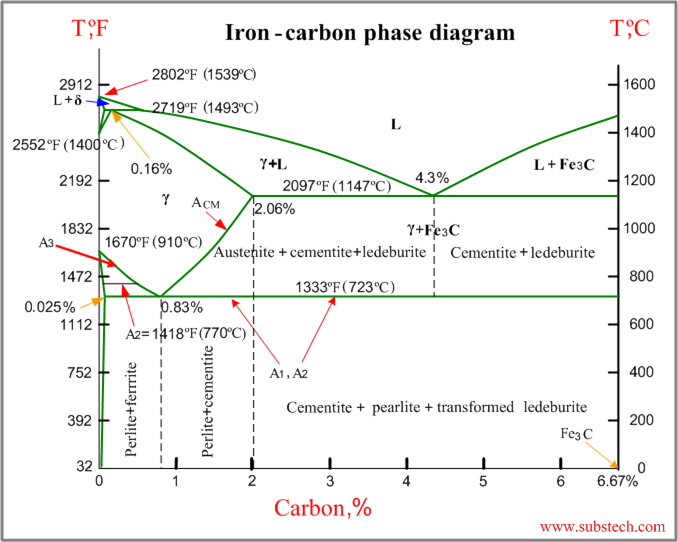
Annealing – Heat to 800°C – 850°C (1472°F – 1562°F). Hold until the temperature is uniform. Cool in a furnace.
Normalizing – Heat to 870°C – 920°C (1598°F-1688°F). Hold until the temperature is uniform. Soak for 10 – 15 minutes. Cool in still air.
Stress-Relieving – Heat to 550°C – 660°C (1022°F – 1220°F). Hold until the temperature is uniform. Soak for 1 hour per 25mm of section. Cool in still air.
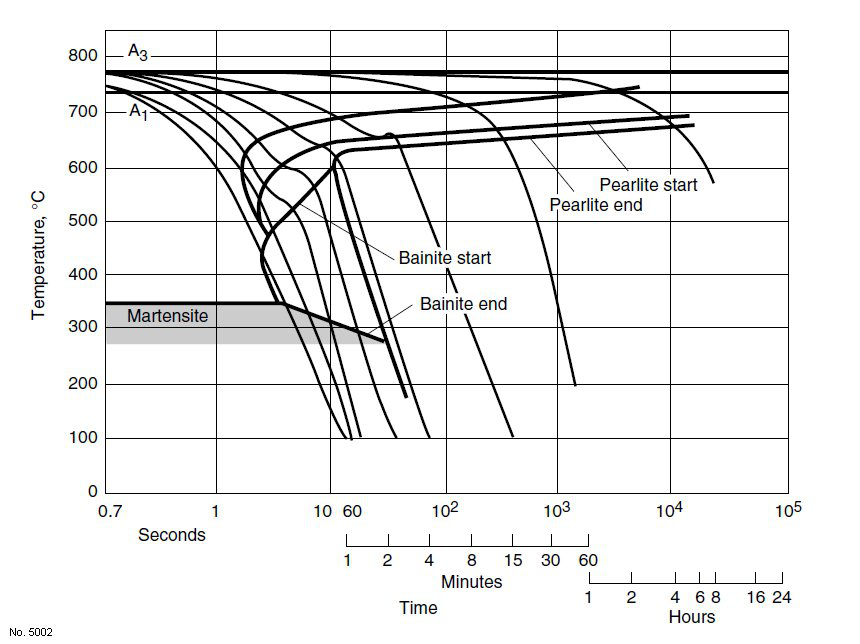
Hardening – Heat to 820°C – 850°C (1508°F – 1562°F). Hold until the temperature is uniform. Soak for 10 – 15 minutes per 25mm of section. Quench in water or brine.
Tempering – Re-heat to 400°C – 650°C (752°F – 1202°F) as required. Hold until the temperature is uniform. Soak for 1 hour per 25mm of section. Cool in still air.
Applications
AISI 1045 is widely used for all industrial applications requiring more wear-resistance and strength. Typical applications of AISI 1045 are as follows:
| Gears | Pins | Rams |
| Shafts | Rolls | Sockets |
| Axles | Spindles | Worms |
| Bolts | Ratchets | Light gears |
| Studs | Crankshafts | Guide rods |
| Connecting rods | Torsion bars | Hydraulic clamps |
1018 VS. 1045 STEEL COMPARISON
Carbon steel is one of the most widely used materials in the world, and the 1018 and 1045 grades of steel is a big reason for that. One of the most common questions that arise when considering buying cold finished steel products is the difference between 1018 cold steel bars and 1045 cold bars. There will obviously be some differences between the chemical makeup and mechanical properties of both, but what materials are ideal for certain applications?
Chemical Properties
Being two different grades of steel, there are some important differences during the manufacturing process that influences key differences in the chemical properties of both 1018 and 1045 grades of steel. To best illustrate the chemical differences, it is good to reference a table.
| 1018 | 1045 | |
| Iron, Fe | 98.81-99.26% | 98.51-98.98% |
| Carbon, C | 0.18% | 0.45% |
| Manganese, Mn | 0.60-0.90% | 0.60-0.90% |
| Phosphorus, P (max) | 0.04% | 0.04% |
| Sulfur, S (max) | 0.05% | 0.05% |
As you may have noticed, the carbon content is what identifies the steel grade. The carbon content of 1018 is 0.18%, and the carbon content of 1045 steel is 0.45%. The “1” identifies that they are both carbon steels, and the “0” identifies that there were no modifications to the alloy. A carbon steel like 1330 for example has a much higher concentration of manganese. The carbon content is what really separates the chemical composition of 1018 and 1045, with 1045 steel having a higher carbon composition.
Mechanical Properties
Whether steel is cold drawn or hot rolled plays a huge factor in the mechanical properties of steel. The majority of 1018 and 1045 steel that is manufactured will be in the cold drawn state, and comes in a wide range of shapes and sizes. Here is a comparison chart of 1018 and 1045 cold drawn steel mechanical properties:
| 1018 | 1045 | |
| Tensile Strength | 64,000 psi | 91,000 psi |
| Yield Strength | 54,000 psi | 77,000 psi |
| Elongation in 2″ | 15% | 12% |
| Reduction in Area | 40% | 35% |
| Brinell Hardness | 126 | 179 |
Real Life Applications
With higher carbon content and higher tensile strength, 1045 is a stronger steel than 1018. However, because it has a higher carbon content, it is not as easy to weld. Therefore 1018 is used mostly for applications that may involve welding or require a larger quantity where tensile strength and yield strength is not of the highest importance. 1045 is often selected for product applications that require more strenth than 1018 can provide, such as transmission parts.
Cost
1018 is one of the most widely manufactured grades of steel as it is a cost effective and adequate steel option for a wide range of applications. Therefore 1018 steel will generally be a lower cost steel when compared to 1045, but many other factors can influence the overall cost like heat treatment and processing needs.
Used in the manufacture of a variety of bolts, connecting rods, hydraulic clamps and rams, axles, a variety of pins, a variety of rolls, studs, shafts, spindles and many other metal parts, SAE 1045 steel usually comes in the black hot-rolled variety; however, it also is occasionally manufactured in the normalized condition. This is steel that has been given a heat treatment, intended to bring many samples under consideration into the same condition. 1045 is known for fairly good strength and impact properties. It has good machinability qualities as well as serviceable welding qualities, whether in the rolled or normalized condition. Machinability is the ability to form the finished steel into a machined part.